
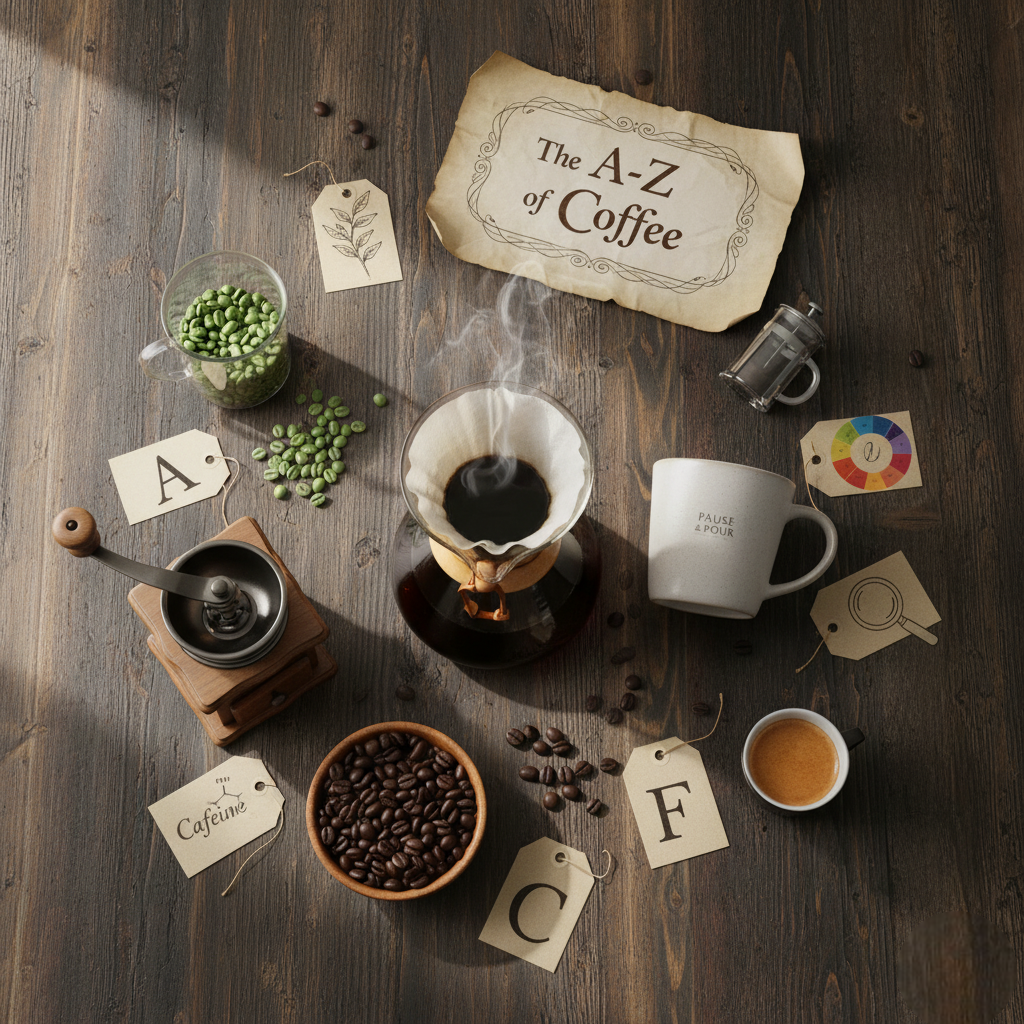
Welcome to Pause and Pour — your destination for discovering the world of specialty coffee. Whether you are a beginner coffee lover or an experienced home brewer, understanding coffee from bean to brew can completely transform your coffee experience.
In this complete A to Z coffee guide, we explore coffee beans, brewing methods, espresso basics, roasting styles, coffee flavor notes, and specialty coffee terms used by professionals around the world. If you want to learn about coffee culture, coffee processing methods, and how to brew better coffee at home, this guide is for you.
Grab your favorite cup of coffee and explore the ultimate coffee glossary designed for every coffee enthusiast.
A-E: Coffee Basics Every Coffee Lover Should Know
A is for Arabica Coffee Beans
Arabica coffee beans are the most popular and highest-quality coffee beans in the world. Known for their smooth flavor, balanced acidity, and rich aroma, Arabica beans are commonly used in specialty coffee because of their complex taste profiles including chocolate, caramel, fruit, and floral notes.
B is for Coffee Brewing Methods
Different coffee brewing methods create different coffee flavors and textures. Popular brewing techniques include French Press, Pour Over, Espresso, AeroPress, and Cold Brew. Choosing the right brewing method helps improve coffee extraction and flavor quality.
C is for Crema in Espresso
Crema is the golden-brown foam layer found on top of a freshly brewed espresso shot. A rich crema indicates fresh coffee beans and proper espresso extraction.
D is for Coffee Dosing
Coffee dosing refers to the amount of coffee grounds used during brewing. Accurate dosing is important for maintaining consistent coffee flavor and balanced extraction.
E is for Espresso Coffee
Espresso is a concentrated coffee brewing method created by forcing hot water through finely ground coffee under pressure. Espresso is the base for popular drinks like cappuccino, latte, americano, and mocha.
F-J: Understanding Coffee Flavor and Coffee Farming
F is for Coffee Flavor Notes
Coffee flavor notes describe the natural taste characteristics found in coffee beans. Specialty coffee can contain flavor notes like berries, chocolate, nuts, citrus, caramel, and floral tones depending on origin and roasting style.
G is for Green Coffee Beans
Green coffee beans are raw, unroasted coffee beans before the roasting process begins. Coffee roasters carefully roast green beans to develop aroma, acidity, sweetness, and body.
H is for Coffee Storage and Humidity
Humidity can reduce coffee freshness and damage flavor quality. Coffee beans should always be stored in an airtight container in a cool and dry place.
I is for Immersion Brewing
Immersion brewing is a coffee brewing method where coffee grounds stay fully submerged in water during extraction. French Press and AeroPress are common immersion brewing techniques.
J is for Jute Bags in Coffee Farming
Jute sacks are traditional bags used for transporting green coffee beans worldwide. They help maintain airflow and preserve coffee quality during shipping.
K-O: Coffee Roasting, Processing, and Coffee Origins
K is for Gooseneck Kettle
A gooseneck kettle provides precise water control for pour over coffee brewing and helps achieve even coffee extraction.
L is for Light Roast Coffee
Light roast coffee preserves the original characteristics of coffee beans and often features bright acidity, floral aromas, and fruity flavor notes.
M is for Micro-Lot Coffee
Micro-lot coffee refers to small batches of premium coffee beans harvested from a specific area on a coffee farm. These coffees are highly valued in specialty coffee markets.
N is for Natural Process Coffee
Natural process coffee is made by drying coffee cherries with the fruit still attached to the bean. This process creates fruity, sweet, and wine-like coffee flavors.
O is for Coffee Origin
Coffee origin refers to the country or region where coffee beans are grown. Single-origin coffee highlights the unique flavor profile of a specific location.
P-T: Specialty Coffee Equipment and Techniques
P is for Portafilter
A portafilter is the handled tool used in espresso machines to hold coffee grounds during espresso extraction.
Q is for Q-Grader Coffee Expert
A Q-Grader is a certified coffee professional trained to evaluate coffee quality, aroma, acidity, body, and flavor balance.
R is for Robusta Coffee Beans
Robusta coffee beans contain higher caffeine levels and stronger flavors compared to Arabica beans. They are commonly used in espresso blends and instant coffee.
S is for Specialty Coffee
Specialty coffee refers to high-quality coffee beans scoring 80 points or above on industry grading standards. Specialty coffee focuses on sustainable sourcing, roasting quality, and exceptional flavor.
T is for Espresso Tamping
Tamping is the process of compressing coffee grounds evenly before brewing espresso. Proper tamping improves espresso extraction consistency.
U-Z: Advanced Coffee Terms and Brewing Science
U is for Under-Extracted Coffee
Under-extracted coffee occurs when brewing time is too short or the coffee grind is too coarse. This can cause sour and weak coffee flavors.
V is for Coffee Varietals
Coffee varietals are different plant varieties within Arabica or Robusta coffee species. Popular coffee varietals include Bourbon, Typica, and Geisha.
W is for Washed Process Coffee
Washed process coffee removes fruit from the coffee bean before drying. This processing method produces clean, bright, and crisp coffee flavors.
X is for Xanthine and Caffeine
Xanthine is the chemical group that includes caffeine, the natural stimulant responsible for coffee’s energy-boosting effects.
Y is for Yemen Coffee
Yemen is one of the oldest coffee-producing regions in the world and is famous for its rich, chocolatey, and naturally processed coffee beans.
Z is for Zero-Defect Coffee
Zero-defect coffee refers to high-quality coffee beans carefully sorted to remove defects and maintain specialty coffee standards.
Final Thoughts on Specialty Coffee
Learning coffee terminology helps you understand the craftsmanship behind every cup. From coffee farming and roasting to brewing techniques and espresso preparation, every step affects the final flavor in your mug.
At Pause and Pour, we believe coffee is more than just a drink — it is an experience, a ritual, and a passion. Explore our specialty coffee collection and discover premium coffee beans crafted for coffee lovers who appreciate quality in every sip.